12 Best Robot Books for Kids: Funny and Unique Stories
Key Takeaways
- Some robot books combine entertainment with STEM learning, introducing concepts like coding, engineering, and problem-solving through stories kids actually want to read.
- Robot book themes range from action-packed battles to gentle stories about friendship, empathy, and what makes someone, or something, truly alive.
- Personalized robot books where your child appears as the main character create higher engagement and make reading feel like a personal adventure.
- Robot stories work for all ages, from toddlers enjoying simple rhymes to older kids reading chapter books with complex plots.
Beeping buttons and whirring gears. Shiny metal bodies that move all by themselves. Robots grab kids' attention like almost nothing else.
It could be the idea that a machine might also be a friend. Or the quiet amazement of how something made from bolts and circuits can think, talk, and head off on adventures. Whatever draws them in, robot books for kids resonate with children's natural curiosity about technology, the future, and how humans and machines might coexist.
This list brings together the top 12 robot books for kids, with plenty of range. Whether you're shopping for a toddler who loves bold illustrations or a middle schooler ready for deeper ideas, whatever their interests and age, there's a mechanical friend waiting somewhere on this list.
Best Robot Books for Kids
We've pulled together the best robot books for every age and reading level: from sturdy board books for little hands to chapter books for kids who are confidently reading on their own. The mix includes well-loved favorites, STEM-focused stories, and a few truly special personalized books where your child steps right into the action.
Each pick brings something special, like laugh-out-loud humor, touching friendships, or exciting adventures that introduce science concepts without feeling like a lesson.
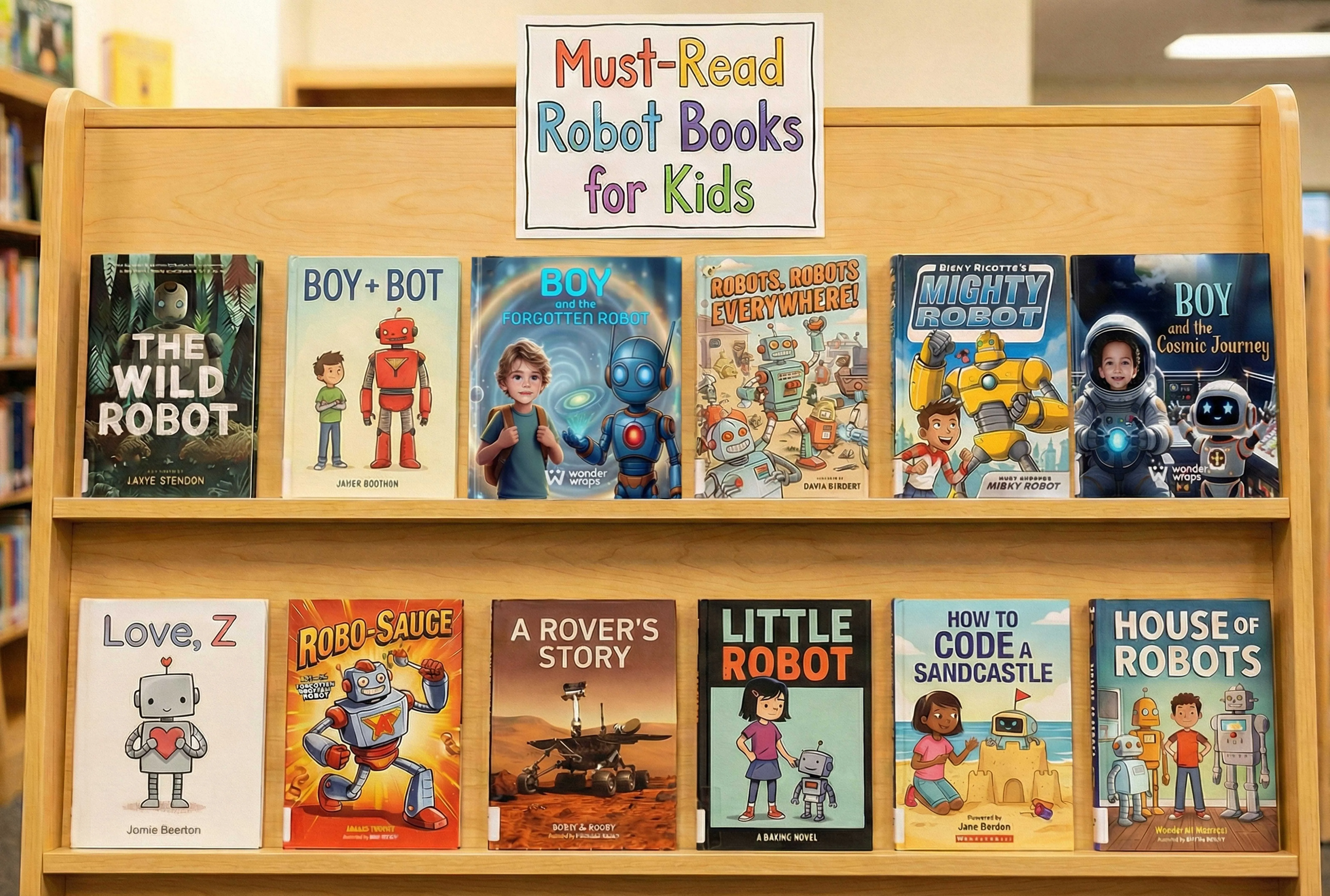 1. The Wild Robot by Peter Brown
Target age: 8–12 years
When a robot named Roz wakes up alone on a remote island, she has to learn to survive in the wilderness. She's not designed for nature; she's designed for factories and cities. But with determination and help from the island's animals, Roz adapts, builds friendships, and starts to wonder: What does it mean to be alive?
Why it works: This book asks big questions about identity, belonging, and empathy without ever feeling heavy. Roz is logical and practical, but her journey toward understanding emotions and relationships will have kids thinking long after they finish the last page.
Key feature: Gorgeous illustrations bring the island to life, and the story balances humor with genuinely touching moments. Perfect for kids ready for longer chapter books with depth.
2. Boy + Bot by Ame Dyckman
Target age: 4–8 years
A boy and a robot become best friends. When the robot powers down, the boy thinks he's sick and tries to fix him with soup and a blanket. When the boy falls asleep, the robot thinks he's broken and tries to fix him with tools. It's a sweet, silly misunderstanding that shows how friendship works even when you don't speak the same language.
Why it works: Kids love the humor of each character trying to help in totally wrong (but well-meaning) ways. It's a gentle introduction to perspective-taking and empathy.
Key feature: The parallel structure (boy helps robot, then robot helps boy) makes this a fun read-aloud that even toddlers can follow.
3. Boy and the Forgotten Robot
Target age: 4–7 years
Boy and the Forgotten Robot is a personalized adventure, where your child is the hero who finds a forgotten robot on an abandoned space station and helps bring it back to life. Together, they solve problems, fix systems, and bring the station out of darkness, while building a close friendship.
Why it works: When your child sees their own photo and name in the story, reading becomes personal. They're not just hearing about a character's bravery, but they're experiencing it themselves.
This kind of personal connection shows up in real behavior. One study found that toddlers who read personalized books spent more time engaged and made more comments linking the story to their own lives compared to children reading non-personalized books.
Key feature: Full preview before ordering, and parents can upload their child's photo so they appear as the main character throughout the beautifully illustrated pages. Works great for young readers who love STEM concepts, problem-solving, and the idea that even something "forgotten" can become extraordinary with a little care.
Perfect for: Keepsake books that kids return to again and again because they're in the story.
4. Robots, Robots Everywhere! by Sue Fliess
Target age: 2–5 years
Robots are building, beeping, zooming, and helping all over town in this rhyming picture book. From construction sites to kitchens, robots are everywhere, making life more fun.
Why it works: The bouncy rhymes and bright illustrations make this a hit for toddlers and preschoolers. It introduces the idea that robots are part of everyday life in a playful, non-intimidating way.
Key feature: Simple, rhythmic text perfect for bedtime or car rides. Kids will want to "read" along by filling in the rhyming words.
5. Ricky Ricotta's Mighty Robot by Dav Pilkey
Target age: 6–9 years
Ricky Ricotta is a small mouse with a big problem: bullies. But when he befriends a giant robot, everything changes. Together, they save the world from evil villains and prove that true friendship is the mightiest power of all.
Why it works: This series (there are many books!) combines comic-style illustrations with fast-paced action. Reluctant readers love the "flip-o-rama" action scenes and the humor packed into every chapter.
Key feature: Short chapters with lots of pictures make this approachable for early chapter book readers who aren't quite ready for dense text.
6. The Boy and the Cosmic Journey
Target age: 5–10 years
In The Boy and the Cosmic Journey, your child boards a spaceship with a friendly robot guide and blasts off on a tour of the universe (from the craters of the Moon to glowing nebulae and distant planets). With 30 illustrated pages of wonder, this personalized space adventure celebrates curiosity, imagination, and the joy of exploring the unknown.
Why it works: Kids who love space and robots get the best of both worlds. Seeing themselves as the astronaut-explorer (complete with their own photo) makes the universe feel within reach. It is reported that children reading personalized books show higher frequencies of smiles, laughter, and vocal engagement than when reading non-personalized stories.
Key feature: Free U.S. shipping, full preview before purchase, and a robot companion who guides your child through each discovery. It's educational without feeling like a textbook, just pure cosmic fun.
Perfect for: Budding scientists, dreamers, and kids who ask "What's out there?" a hundred times a day.
7. Love, Z by Jessie Sima
Target age: 4–8 years
A robot is built to do one thing: create sandwiches. But when it discovers art, music, and poetry, it starts to wonder if there's more to life than perfectly stacked ingredients. This is a story about finding your purpose and the courage to be different.
Why it works: It's a beautiful exploration of creativity and self-discovery. Kids learn that you're not stuck being what someone else designed you to be. You can change, grow, and find your own path.
Key feature: Stunning, colorful illustrations and a gentle message about following your heart (or circuits).
8. Robo-Sauce by Adam Rubin
Target age: 4–8 years
A boy builds a robot out of junk to help him with chores. But when he accidentally spills "Robo-Sauce" on everything, chaos breaks loose: suddenly his dog, his sister, and even his lunch are turning into robots. Hilarity follows.
Why it works: This book is pure silly fun. Kids love the absurd premise and the wild illustrations. It's the kind of story that makes them giggle out loud.
Key feature: Bright, cartoonish art and a fast pace that keep even wiggly kids engaged.
9. A Rover's Story by Jasmine Warga
Target age: 8–12 years
This middle-grade novel is told from the perspective of a Mars rover named Resilience. Built by a team of scientists, Res is sent to Mars to explore, collect data, and search for signs of life. Along the way, Res grapples with unexpected feelings of loneliness and hope while being millions of miles from home.
Why it works: It's a deeply emotional story that makes kids think about exploration, purpose, and what it feels like to be far from everything you know. Great for sparking conversations about space, science books, and the human (or robotic) experience.
Key feature: Based on real Mars missions, this book blends science facts with heartfelt storytelling.
10. Little Robot by Ben Hatke
Target age: 5–9 years
A girl finds a small, broken robot in a junkyard and brings it home. As they become friends, they realize that the robot's creators are looking for it, and they're not happy. This wordless graphic novel tells a story of rescue, bravery, and unlikely friendship entirely through illustrations.
Why it works: No words means every child can "read" it at their own level. The pictures tell a complete, emotional story that even pre-readers can follow and enjoy.
Key feature: Stunning artwork that captures every emotion without a single line of dialogue.
11. How to Code a Sandcastle by Josh Funk
Target age: 4–8 years
Pearl wants to build the perfect sandcastle, but she's not sure how. Enter Pascal the hermit crab, who explains coding concepts like sequencing, loops, and debugging, while helping Pearl plan her creation.
Why it works: This is STEM learning disguised as a beach day. Kids absorb foundational coding ideas without realizing they're learning. It's smart, playful, and packed with colorful seaside illustrations.
Key feature: Includes a glossary of coding terms at the end, making it a great conversation starter for parents who want to introduce tech concepts early.
12. House of Robots by James Patterson
Target age: 8–12 years
Sammy's house is full of robots. His mom is a scientist who invents them, so there's a robot to cook, clean, and even embarrass him in front of his friends. But when his mom creates E, a robot designed to act like a kid, Sammy has to bring E to school, and chaos follows.
Why it works: It's fast, funny, and full of heart. The story explores family, friendship, and what makes someone "human" while keeping the laughs coming on every page.
Key feature: Short chapters and comic-style illustrations make it perfect for middle-grade readers who want a quick, entertaining read.
How to Choose the Right Robot Book for Your Child
Not all robot books are created equal, and that's a good thing. The right book depends on your child's age, interests, and what you're hoping they'll get out of the story. Here's how to choose.
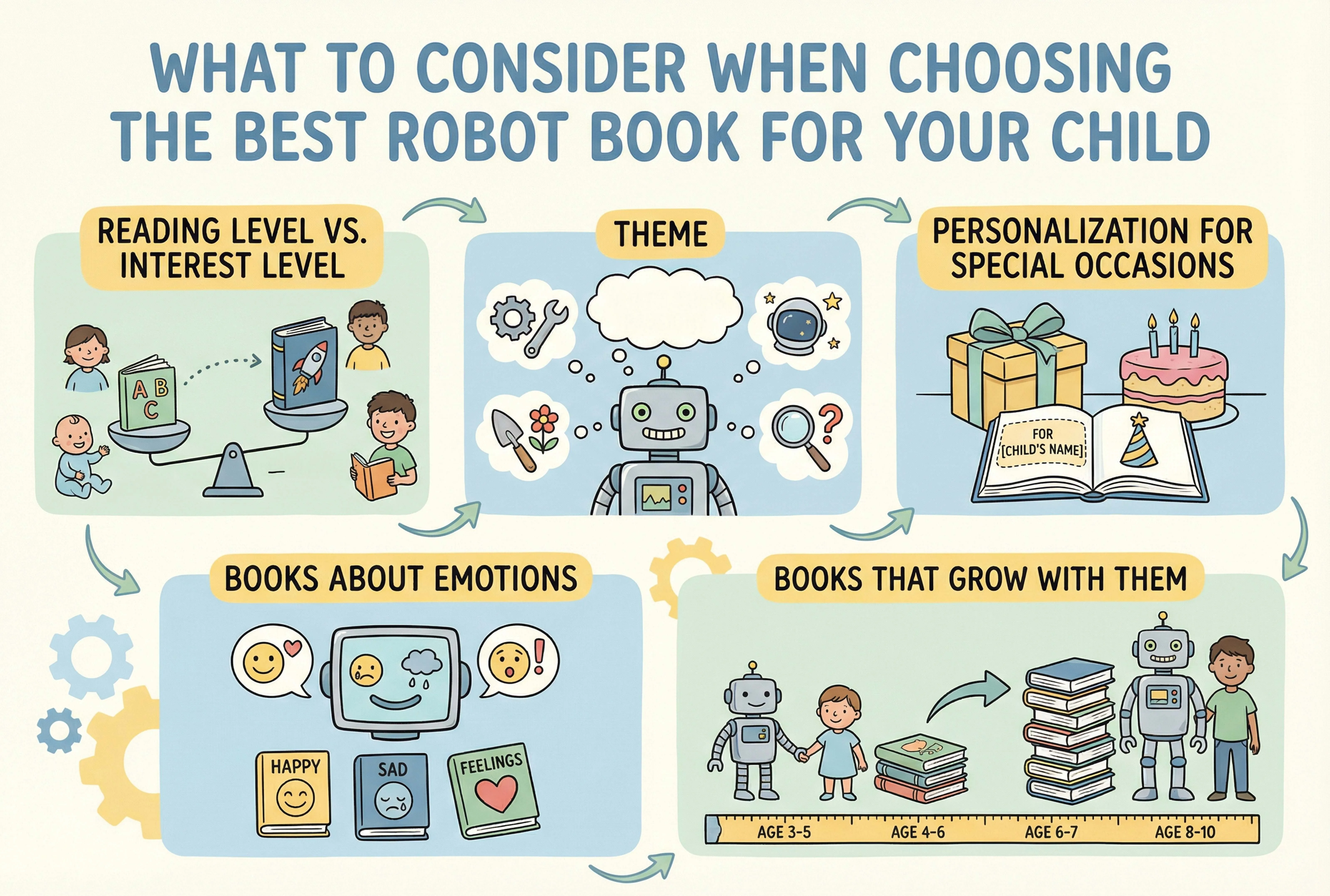 Match reading level to interest level
A seven-year-old might have the reading skills for a chapter book but prefer picture books with robots because they love the illustrations. That's okay. Some kids want detailed diagrams and nonfiction explanations, while others just want a silly story with a mechanical sidekick. Follow their curiosity, not just their reading level.
Consider the theme
Robot books fall into a few categories: action-packed adventures with battles and rescues, gentle friendship stories about connection and empathy, and STEM-focused tales that introduce science and engineering concepts. Think about your child's personality (Do they love fast-paced action, or do they prefer quiet, emotional stories?), and choose accordingly.
Think about personalization for special occasions
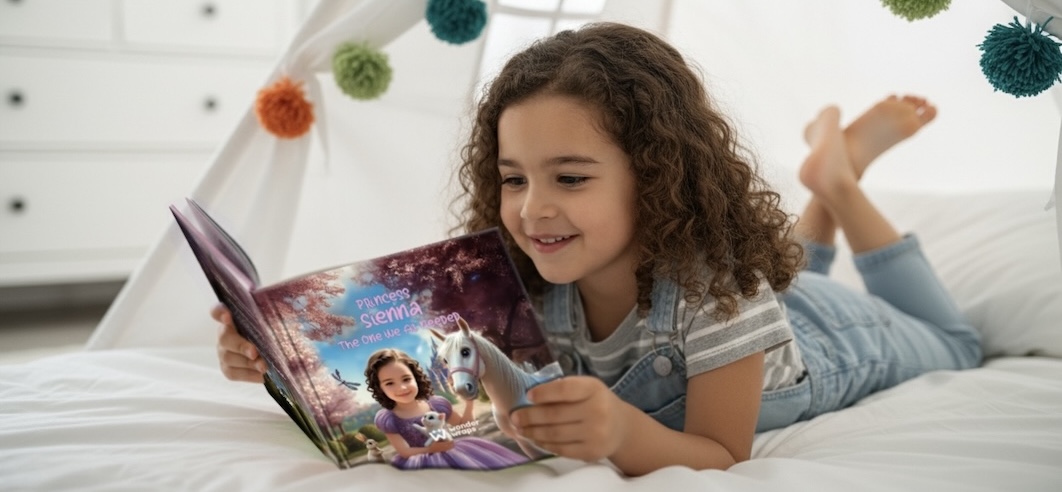
Standard books are wonderful, but personalized books, where your child appears as the main character, bring a whole different level of engagement. When kids see their own name and photo in the story, they are the hero. This makes the story feel like it was written just for them, which is why personalized books work so well as gifts, keepsake books, or motivation for reluctant readers.
Don't forget books about emotions
Many robot stories explore feelings in surprising ways. A robot learning about friendship, sadness, or what it means to care about someone can help kids process their own emotions. Stories like Boy + Bot or Love, Z offer gentle entry points for conversations about empathy, identity, and connection.
Look for books that grow with them
Some robot books are simple enough for a four-year-old, yet still meaningful when revisited at seven or eight with a deeper understanding. As children grow, they notice new details, themes, and emotions in the same story. Personalized adventures become especially treasured rereads because a child never outgrows seeing themselves as the hero.
Ready to Start Your Mechanical Adventure?
Robot books for kids aren't just about gears and gadgets. They're about friendship, bravery, curiosity, and figuring out what makes someone, or something, truly special. Whether your child is drawn to silly stories, heartfelt tales, or action-packed adventures, there's a robot out there waiting to become their new favorite character.
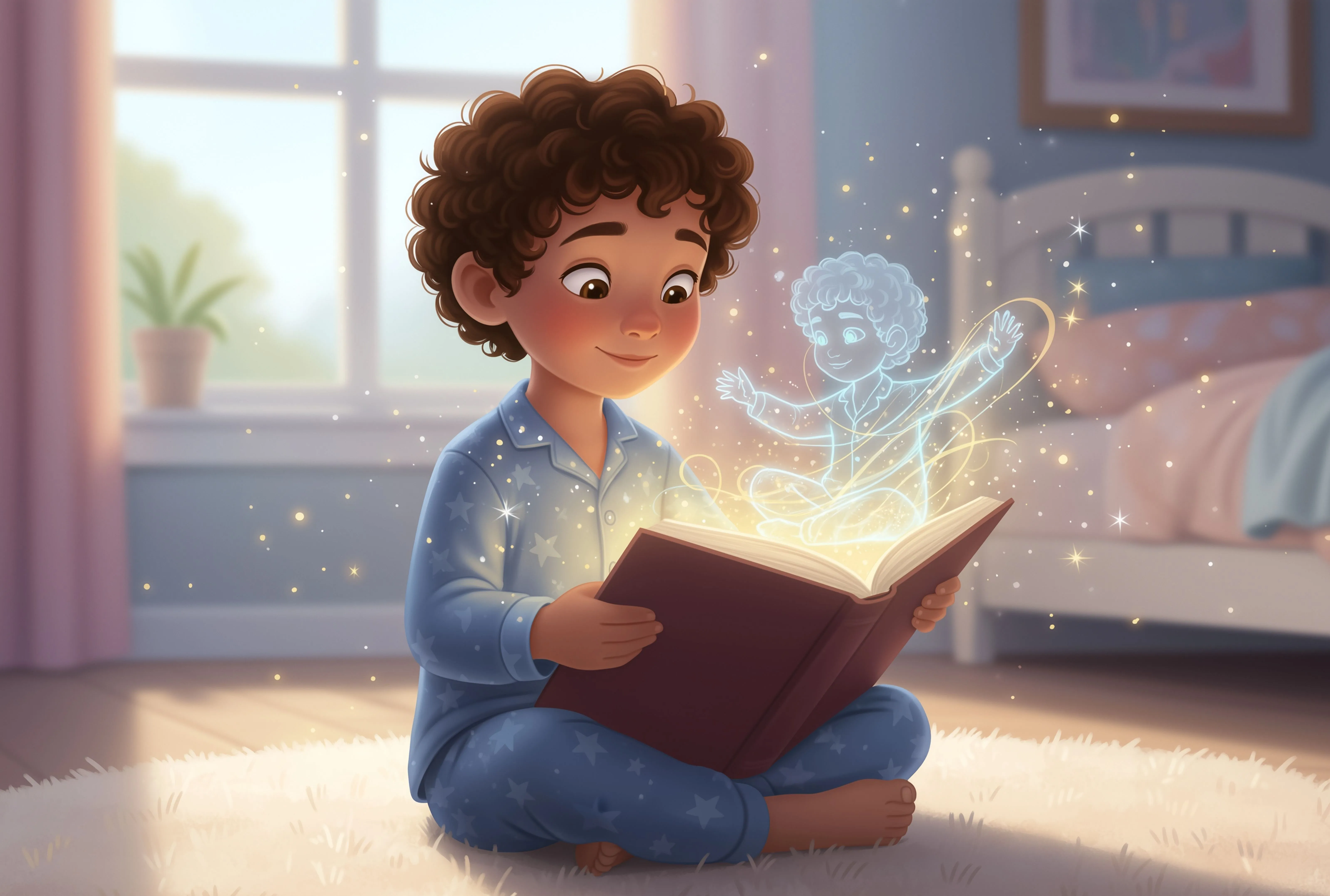 It's also important to remember that reading becomes even more magical when your child isn't just cheering for the hero; they are the hero.
If you're looking for a truly unique gift or a way to spark excitement about reading, explore Wonderwraps' personalized adventures. Your child's face, name, and personality become part of the story, turning reading time into an experience they'll treasure forever!
Frequently Asked Questions (FAQs)
Do robot stories teach kids about STEM?
Yes, many robot books introduce coding, engineering, and problem-solving concepts through storytelling, making STEM learning fun and accessible for young readers.
Are there robot books that focus on friendship instead of fighting?
Absolutely. Books like Boy + Bot, Love, Z, and The Wild Robot center on connection, empathy, and what it means to care about someone different from you.
At what age should I introduce robot books to my kid?
You can start as early as age 2 with simple rhyming picture books, then move to chapter books and personalized adventures as they grow. Robot stories work for all ages.