Reading Development Milestones by Age and Skill Level
Key Takeaways
- Reading development follows predictable stages from listening and recognition to independent comprehension.
- Each age brings specific milestones, but every child moves through them at their own pace.
- Early exposure to books and interactive reading builds the foundation for all later literacy skills.
- Personalized books where children see themselves as the main character can strengthen engagement and word learning at every stage.
Your baby babbles back at a picture book. Your preschooler "reads" by retelling a story they've heard a hundred times. Your first-grader carefully sounds out cat for the very first time, eyes wide, like they've just unlocked something important.
These moments look sweet, and they are, but they're also reading development milestones. And they matter more than most people realize.
Reading milestones by age give you a kind of roadmap for your child's literacy journey. They help you notice progress, spot places where your child could use a little extra support, and understand what's generally typical at each stage. Whether your child is racing ahead, right on track, or taking their time, knowing what to expect makes it easier to respond with confidence instead of worry.
Why Reading Milestones Matter
Reading milestones aren't about pressure or comparison; they're about understanding. When you know what skills typically show up at what age, you can:
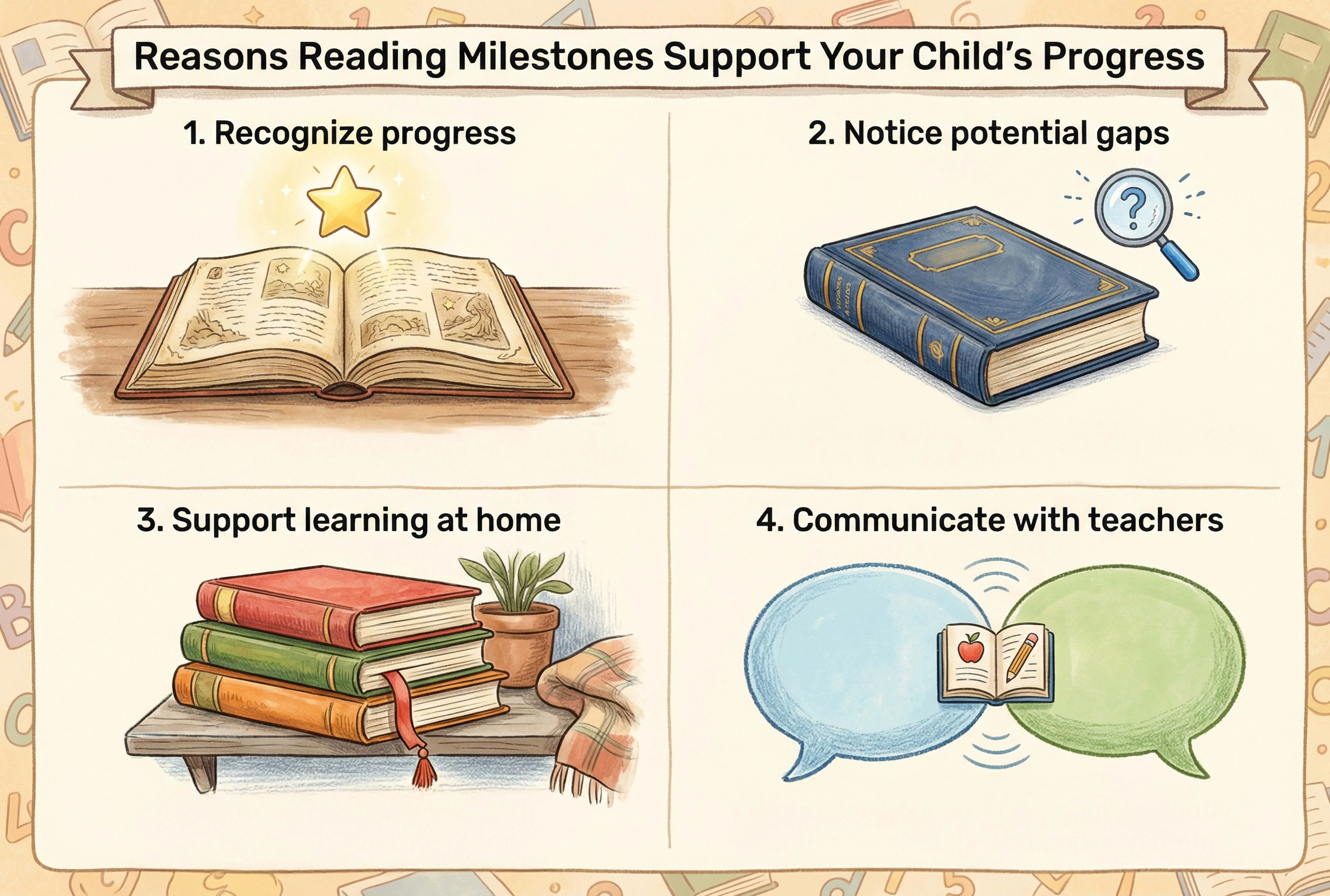
- Identify strengths and celebrate progress: Maybe your four-year-old isn't reading yet, but they're asking thoughtful questions about stories. That's a comprehension milestone worth recognizing.
- Spot delays early: If your seven-year-old still can't recognize basic sight words, that's a signal to explore additional support (not a reason to panic, but a reason to act).
- Guide your support at home: Knowing what comes next helps you choose the right books, ask the right questions, and create activities that meet your child exactly where they are.
- Communicate effectively with teachers: When you understand milestones, you can have more informed conversations about your child's progress and any concerns that come up.
Reading development isn't a race. But milestones give you helpful checkpoints along the way, so you're never guessing whether your child is building the skills they need.
Reading Development Milestones by Age
Every child's reading journey looks a little different, but most follow a similar path. Here's what to expect at each stage, and how you can support growth along the way.
Birth to age 2
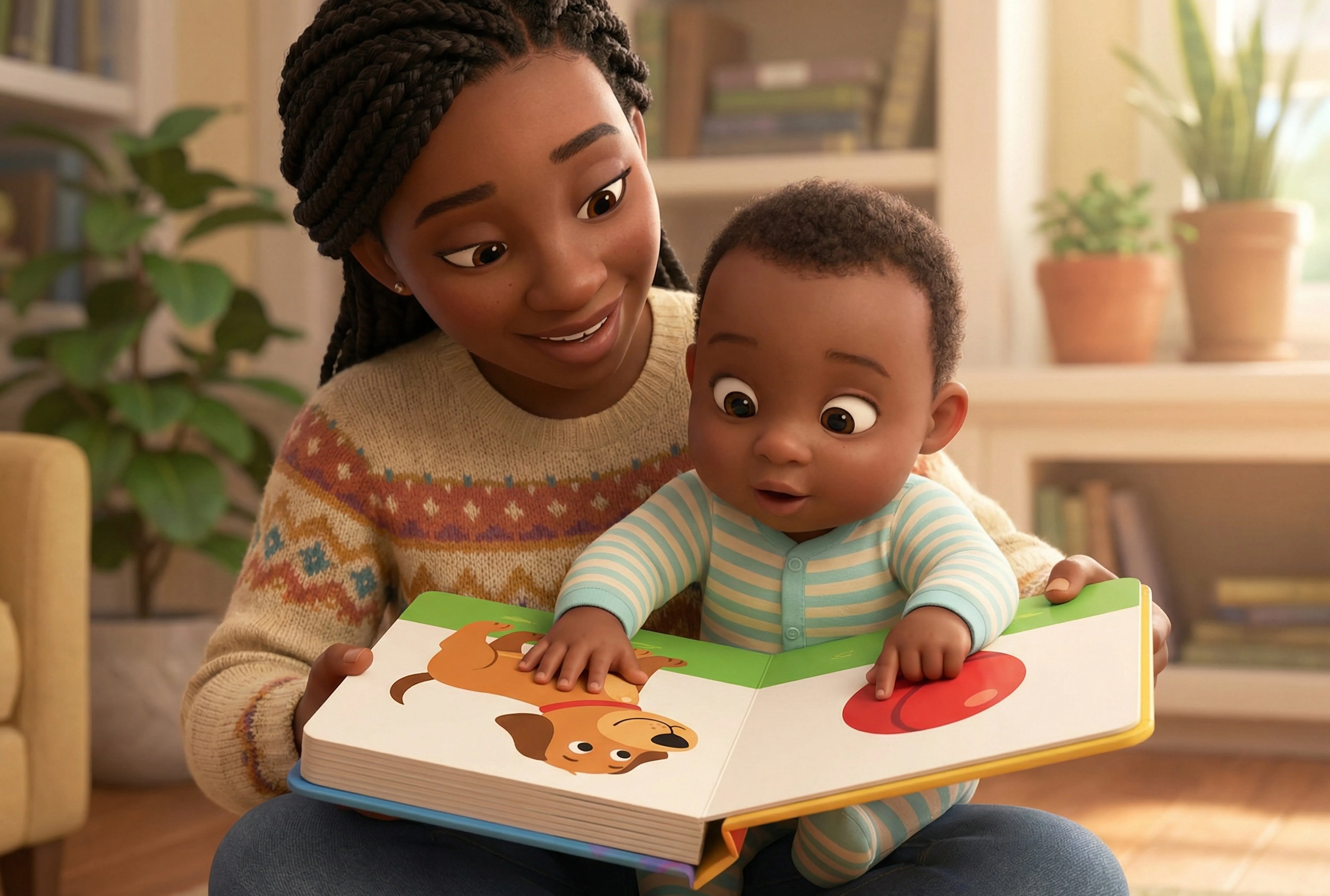
At this stage, "reading" means exposure, not performance. Babies and toddlers are soaking up language, sounds, and the idea that books are something interesting and worth paying attention to.
What you'll see:
- Listening to your voice during read-alouds, even if they don't seem focused
- Reaching for board books and putting them in their mouth (yes, this counts)
- Pointing at pictures, especially familiar objects like dogs or balls
- Turning pages, often several at once
- Babbling or making sounds in response to hearing stories
- Recognizing favorite books and getting excited when you pull them out
Babies aren't reading words, but they're learning that books have meaning, that stories have rhythm, and that reading time is a warm, connected experience. This emotional foundation matters just as much as the cognitive one.
How to support them: Read aloud every day, even for just a few minutes. Choose books with simple, bold images and rhythmic language. Let them chew on the book if they want to; it's part of exploring. Point to pictures and name objects. Make reading feel like play.
Ages 3–4
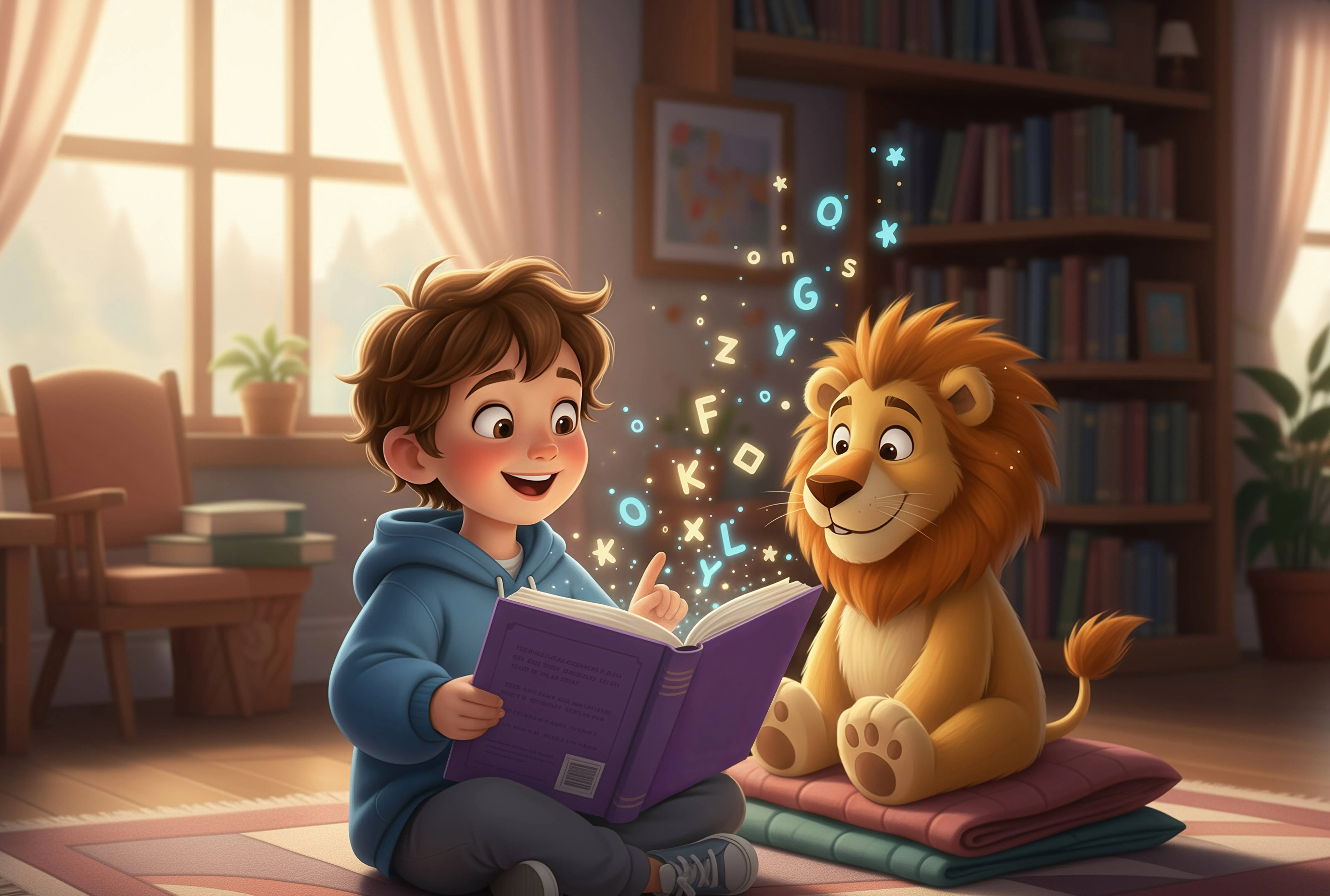
This is when many children start showing real interest in letters and print. They're not reading yet, but they're noticing that those squiggles on the page mean something.
What you'll see:
- Recognizing some letters, especially the ones in their name
- Understanding that print carries meaning (even if they can't read it yet)
- Pretend reading: holding a book and "telling" the story from memory
- Asking what words say or pointing to signs and asking, "What does that say?"
- Rhyming words or playing with sounds ("cat" and "hat" sound the same!)
- Following along as you read, sometimes pointing to words
At this age, kids are building phonological awareness: the understanding that words are made of sounds. This is one of the most important pre-reading skills, and it happens through listening, not formal instruction.
How to support them: Read interactive books where they can predict what happens next or fill in rhyming words. Play sound games: "Can you think of a word that rhymes with 'dog'?" Point to words as you read so they see the connection between spoken and written language. If they're interested in letters, celebrate it, but don't push if they're not ready.
Ages 5–6
Welcome to the early reading years. This is when most children start decoding: matching letters to sounds and blending them into words. It's exciting, but it's also hard work.

What you'll see:
- Sounding out simple three-letter words like "cat," "dog," and "sit"
- Recognizing common sight words like "the," "and," "is," and "you"
- Reading simple sentences slowly and carefully
- Connecting letters to their sounds (phonics)
- Starting to self-correct when a word doesn't make sense
- Showing interest in reading signs, labels, and familiar books on their own
This stage requires a lot of mental effort. Your child is learning to decode and comprehend at the same time, which is like learning to ride a bike while also navigating traffic. Be patient.
How to support them: Choose books at their level (not too hard, not too easy). Decodable books (with simple, phonics-based words) are great for practice. Let them reread their favorite stories. When they get stuck, give them a moment to try before jumping in. Celebrate effort, not perfection. And keep reading aloud to them, even as they start reading independently. This builds vocabulary and keeps the love of stories alive.
This is also where personalized books can make a real difference. When your child sees their own name and photo in the story, they're motivated to read carefully and stay focused. This engagement boost matters when decoding still feels challenging.
Ages 7–8
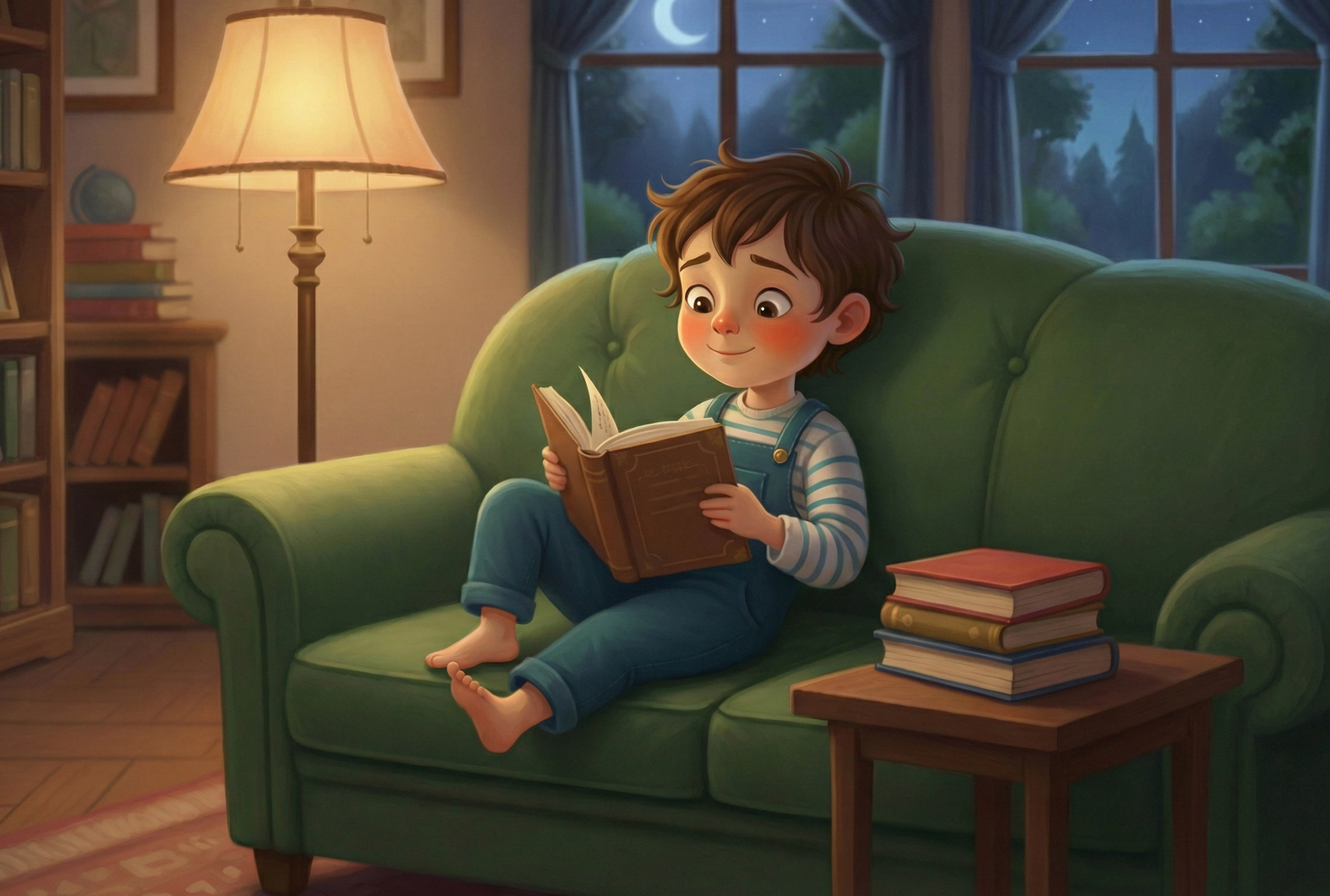
By second and third grade, most children are moving from "learning to read" to "reading to learn." They're building fluency (reading more smoothly and with better expression), and their comprehension is getting stronger.
What you'll see:
- Reading simple chapter books independently
- Recognizing more sight words automatically, without sounding them out
- Reading aloud with better pacing and expression (not robotically, word by word)
- Retelling stories with key details in the right order
- Making predictions and asking questions about what they read
- Starting to read for information, not just for fun
At this age, kids are also developing reading stamina. They can sit with a book for longer stretches and follow more complex plots.
How to support them: Provide books for every age and interest level. Talk about what they're reading; ask open-ended questions like, "What do you think will happen next?" or "Why do you think the character did that?" Let them choose their own books sometimes. Reading a "silly" book they love builds fluency just as much as reading a "serious" one.
Also, continue reading aloud to them. Just because they can read doesn't mean they should do all the reading. Hearing more complex stories read aloud builds vocabulary and comprehension skills they'll use when they're ready to read those books on their own.
Ages 9–10 and beyond
By fourth and fifth grade, most children are confident, independent readers. They're reading longer texts, understanding more complex ideas, and starting to analyze what they read.
What you'll see:
- Reading chapter books and novels with multiple characters and plot lines
- Understanding themes, making inferences, and connecting ideas across texts
- Reading for different purposes (entertainment, information, schoolwork)
- Using context clues to figure out unfamiliar words
- Showing preferences for certain genres or authors
- Reading silently with strong comprehension
At this stage, the focus shifts from decoding to deeper comprehension and critical thinking. Kids are interpreting, questioning, and connecting what they read to the world around them.
How to support them: Give them access to a variety of types of books for kids, including fiction, nonfiction, graphic novels, and poetry. Have conversations about what they're reading. Ask them to recommend books to you. Model reading yourself. If they struggle with comprehension, work on strategies like summarizing, visualizing, and rereading confusing parts.
Even at this age, personalized stories can keep reading exciting. When your older child is the hero solving problems in a story designed just for them, reading stays special.
How Parents and Educators Can Support Reading Development
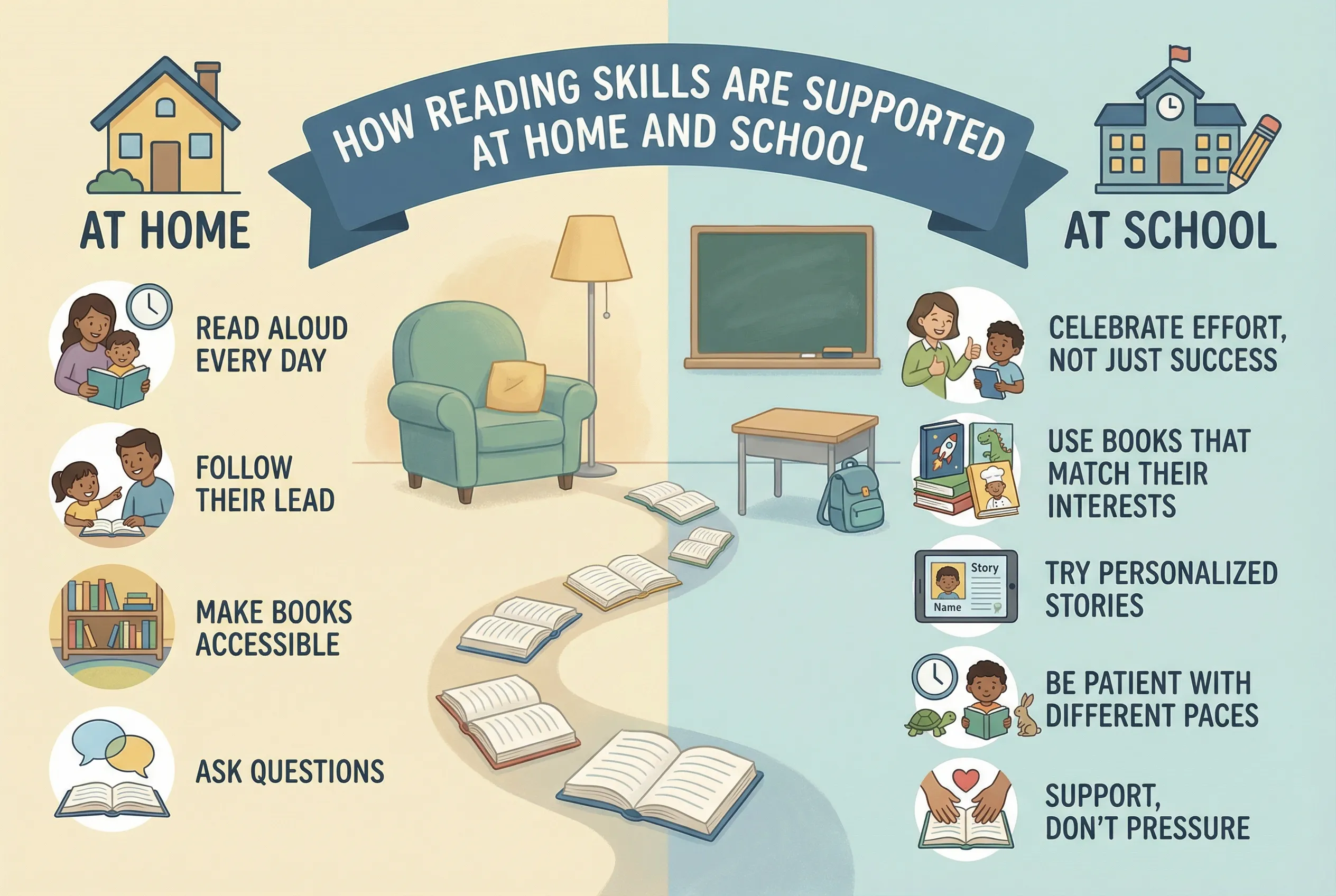
Reading milestones don't happen automatically. They grow out of consistent exposure, encouragement, and the right kind of support. Here's how you can help at every stage:
- Read aloud every day: This is the single most important thing you can do. It builds vocabulary, comprehension, and a love of stories. Even when your child can read independently, keep reading aloud to them.
- Follow their lead: Some kids are ready to read at four. Others aren't ready until six or seven. Both are normal. Pushing too hard too early can backfire.
- Make books accessible: Keep age-appropriate books where your child can reach them. Visit the library regularly. Let them see you reading.
- Ask questions: "What do you think will happen next?" "Why did the character do that?" Questions build comprehension and keep kids engaged.
- Celebrate effort, not just success: Learning to read is hard. Praise your child for trying, even when they get stuck or make mistakes.
- Use books that match their interests: A reluctant reader might ignore a classic novel but devour a book about dinosaurs, soccer, or superheroes. Interest matters more than literary merit at this stage.
- Try personalized stories: Encourage reading in kids by making them the star of the adventure.
- Be patient with different paces: Reading development isn't a straight line. Your child might leap ahead in one area and lag behind in another. That's okay.
- Support, don't pressure: If reading feels like a chore or a test, kids will avoid it. Keep it playful and low-stress.
The Bottom Line: Every Reader Has Their Own Timeline
Reading milestones give you a map, but your child writes their own story. Some kids recognize letters at three. Others don't care about them until five. Some read chapter books in first grade. Others need until third grade to feel confident. All of these paths can lead to strong, capable readers.
What matters most isn't hitting every milestone on schedule, but creating an environment where books are loved, curiosity is welcomed, and effort is celebrated. When reading feels like an adventure instead of an assignment, kids keep coming back to it.
Tonight, grab a book and read with your child. Talk about the pictures. Wonder what happens next. Let them turn the pages. And if they're ready, let them try reading a few words themselves. Every small moment builds the foundation for a lifetime of reading!
If you're looking for stories that truly connect with your young reader, explore our collection of personalized books where your child becomes the hero of every page.
Frequently Asked Questions (FAQs)
Is it normal for children to skip certain reading milestones?
Yes, children develop at different rates and may progress through milestones in a unique order, though significant delays may warrant professional evaluation.
How do bilingual or multilingual children develop reading skills differently?
They may take slightly longer to read fluently in each language, but often develop stronger overall literacy and cognitive flexibility in the long run.
Can screen time affect reading development milestones?
Excessive passive screen time can reduce time spent reading and may delay language development, but interactive, educational content in moderation can support literacy skills.