How to Improve the Attention Span of a Child at Home
Key Takeaways
- Attention span is a trainable skill that grows with practice and the right environment.
- Breaking tasks into small, manageable chunks prevents overwhelm and builds momentum.
- High-stimulation screen time can make slower, real-world tasks feel boring by comparison.
- Interactive reading, especially with personalized books, keeps children engaged longer because they see themselves in the story.
You ask your child to clean their room, and five minutes later, they're deep into building a fort with the laundry basket. You finally sit down to start homework, and suddenly they need water. Then a snack. Then they remember something very important that happened three weeks ago.
Short attention spans can be exhausting to deal with, especially when it feels like you're repeating yourself all day. But here's the reassuring part: attention works a lot like a muscle. With the right approach and some patience, it can grow stronger over time.
The strategies below aren't about strict schedules or pricey programs. They're simple, home-friendly shifts you can work into what you're already doing. Small changes, practiced consistently, that support better focus without turning your day upside down.
Typical Attention Span by Age
Before we talk about improvement, let's set realistic expectations. A short attention span isn't always a problem; it's often developmentally appropriate.
The general rule is that a child can typically focus for about 2 to 6 minutes per year of age on structured tasks.
That means:
- Toddlers (2 years): 4–6 minutes
- Preschoolers (3–4 years): 6–12 minutes
- Early elementary (5–6 years): 12–18 minutes
- Older kids (7+ years): 16–20+ minutes
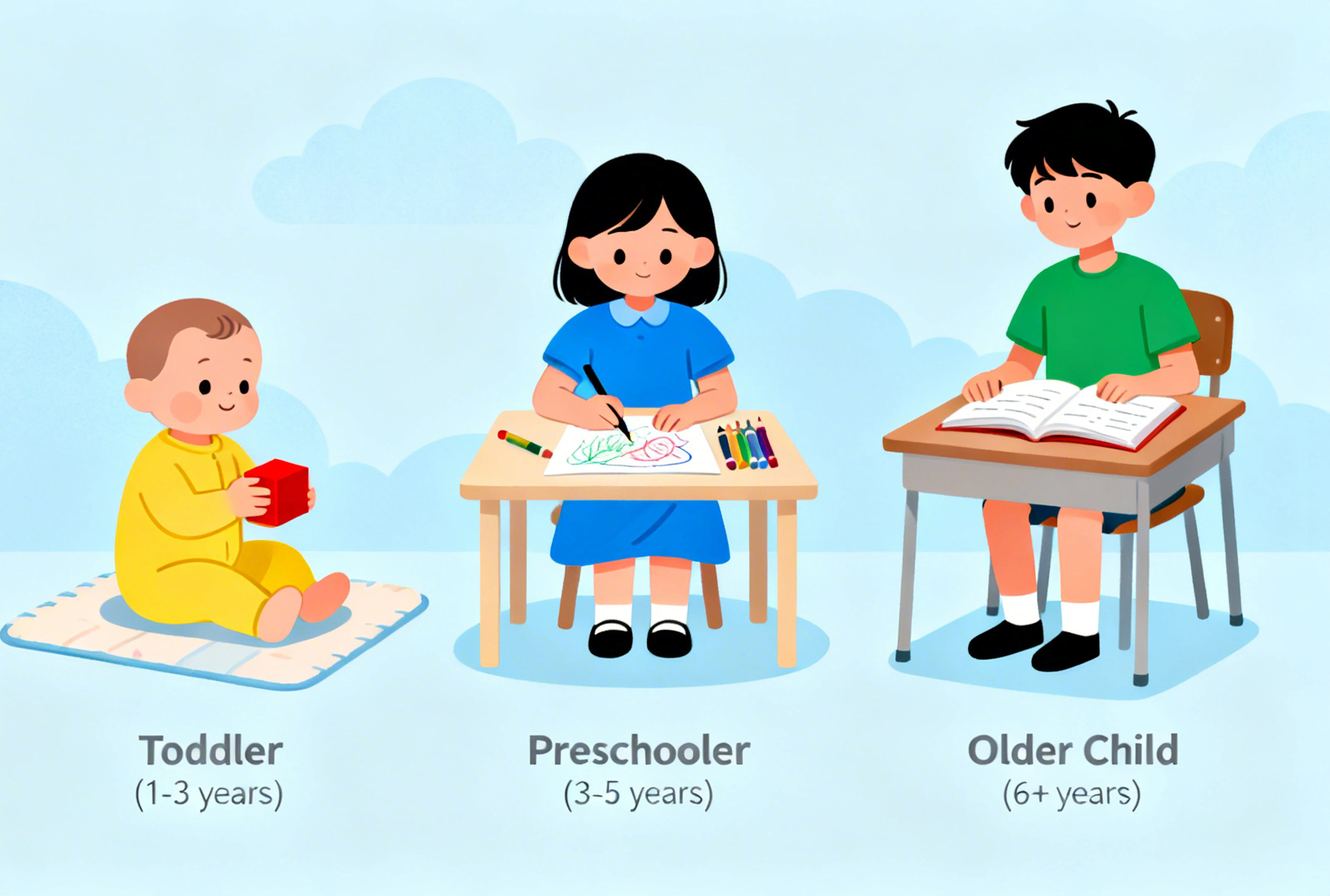 Keep in mind, these timeframes apply to tasks that require active concentration, like homework, cleaning, or following multi-step directions. Watching TV or playing a video game doesn't count. Those activities are passive or highly stimulating, so they don't reflect your child's true attention capacity.
If your five-year-old can't sit still for a 30-minute worksheet, that's normal. But if they can't focus for even five minutes on anything, it's worth exploring ways to build that skill.
How to Improve the Attention Span of a Child
Attention isn't fixed. With small, consistent changes to your child's environment and routine, you can help them focus better and longer. Here's how.
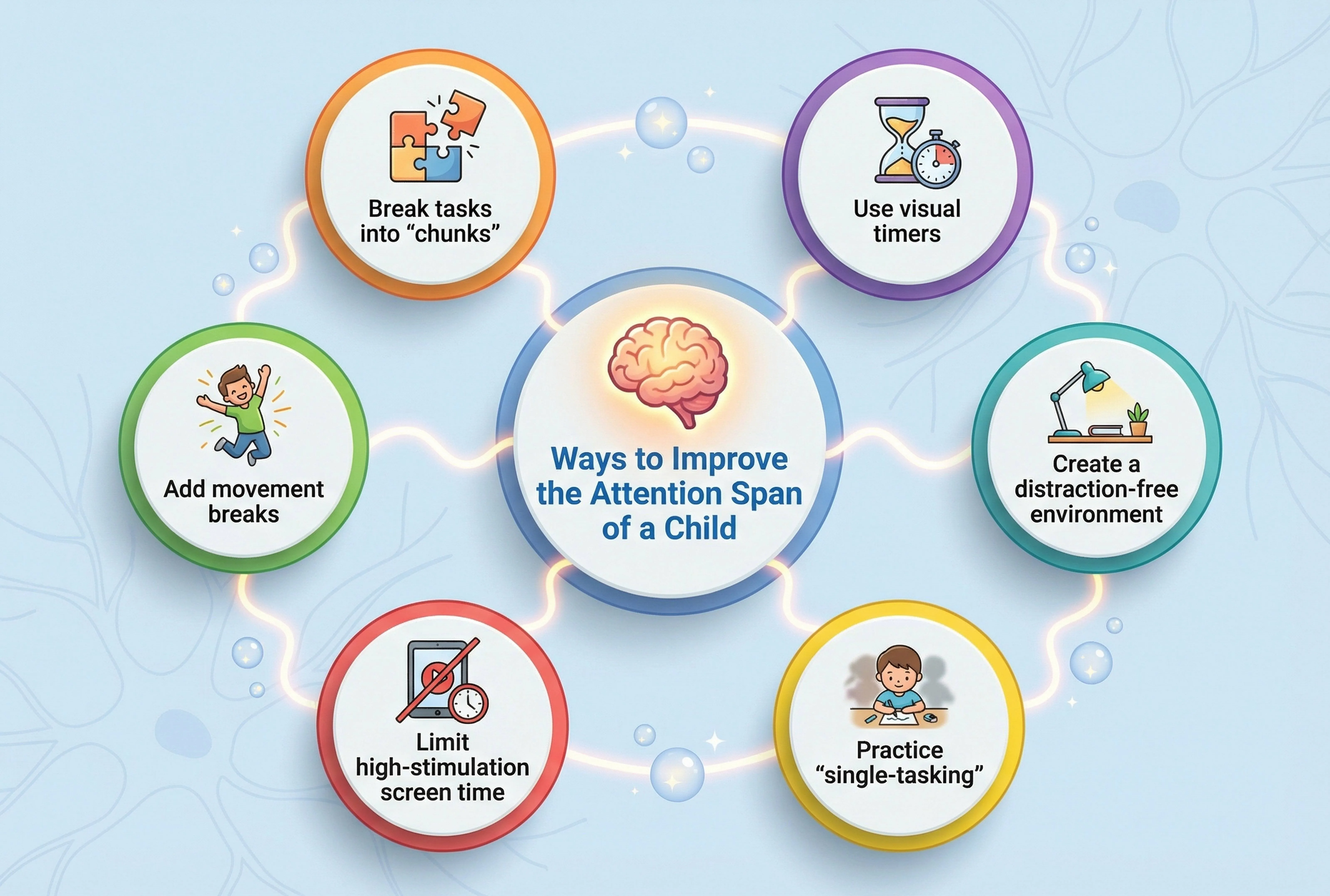 Break tasks into "chunks"
Large tasks feel overwhelming. When you tell a child to "clean your room," their brain sees a giant, undefined mountain of work. They don't know where to start, so they don't start at all, or they get distracted halfway through. Instead, break it down:
- "Put the books on the shelf."
- "Put the toys in the bin."
- "Make your bed."
Each small task feels doable. When they finish one, they get a tiny win, which builds momentum for the next step. Over time, this approach trains their brain to stick with tasks instead of giving up early.
This same method works for homework. Instead of "Do your math worksheet," try "Finish the first three problems." Then take a quick break. Then tackle the next three.
Use visual timers
Time is abstract for kids. Telling a four-year-old, "We're reading for 10 minutes," means nothing to them. They don't know what 10 minutes feels like. Visual timers solve this. Whether it's a sand timer, a colorful countdown clock, or an app that shows time shrinking, kids can see the endpoint. They know exactly when the task will be over.
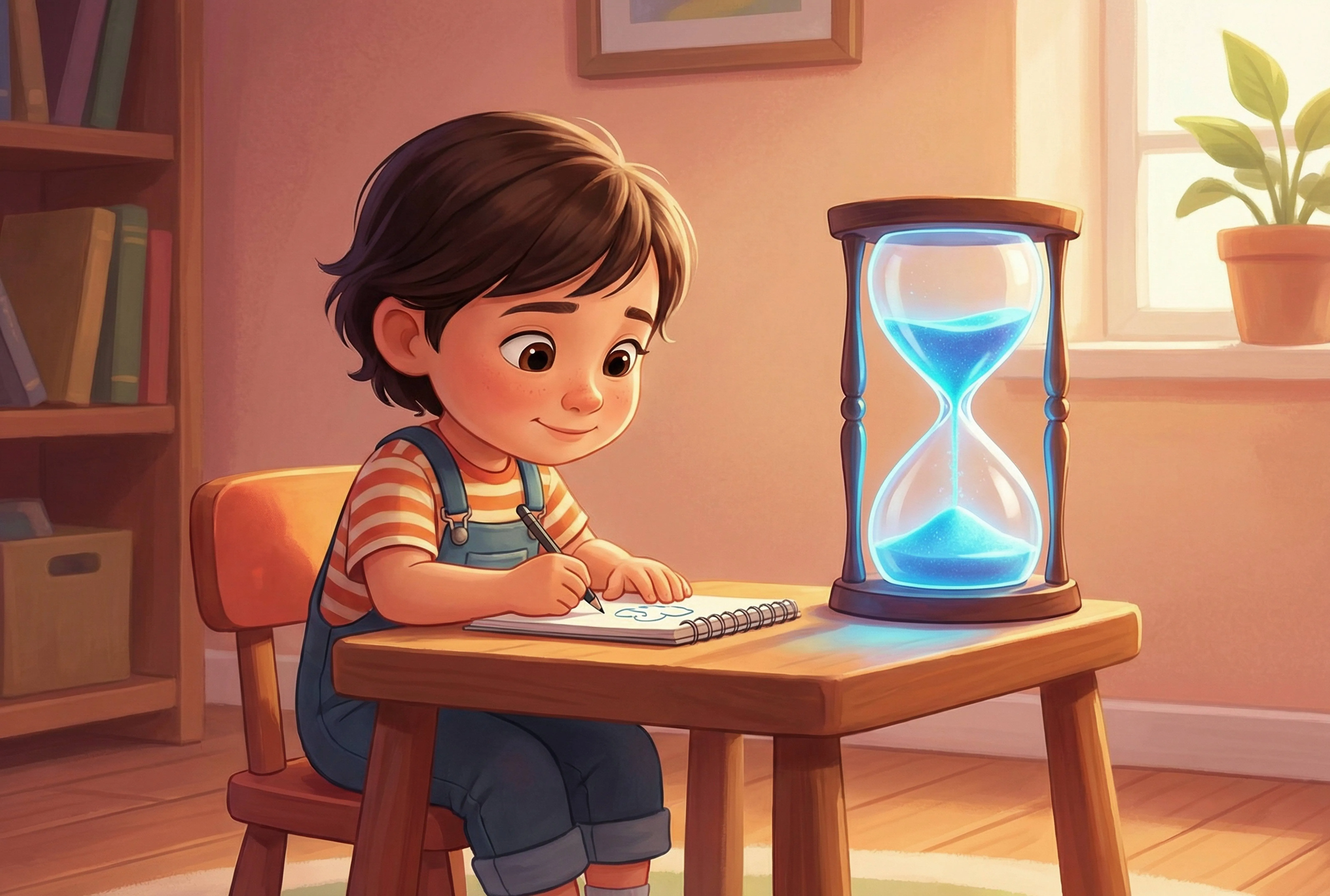 This makes boring or hard tasks more manageable. Your child isn't wondering, "How much longer?" They can literally watch the time tick down. It gives them a sense of control and helps them push through.
Bonus: Visual timers also work for transitions. "When the timer goes off, it's time to put on shoes." No arguments, no surprises.
Add movement breaks
Sitting still for long stretches isn't natural for kids. Their bodies are wired to move. When they've been focusing for a while, their energy builds up, and staying seated becomes harder and harder. The fix is movement breaks. After 10–15 minutes of focused work, let them:
- Do 10 jumping jacks
- Run around the backyard for two minutes
- Stretch or dance to one song
Movement resets the nervous system. It burns off restless energy and actually helps them refocus when they sit back down, like hitting the refresh button on their brain. Just make sure the break is active, not passive. Checking a tablet or watching TV doesn't count; that's just switching from one screen task to another.
Create a distraction-free environment
Your child's focus isn't weak; it's just being pulled in a hundred directions. Open toys, a TV in the background, notifications on a tablet, siblings playing nearby. Every sight and sound competes for their attention.
Start by auditing their workspace:
- Face the desk toward a wall, not a window or busy hallway
- Clear off the table—only the current task and necessary supplies
- Remove toys from view during homework or reading time
- Turn off background TV or music with lyrics (instrumental music or white noise is fine)
By doing this, you're not creating a sterile environment. You're just removing the things that make focus harder. When there's less to look at and listen to, your child's brain can actually settle into the task in front of them.
Limit high-stimulation screen time
Not all screen time is equal. Slow-paced educational shows aren't the problem. The issue is rapid-fire content: short videos, fast-cut games, apps that reward every tap with bright colors and sounds.
When kids spend a lot of time on high-dopamine digital activities, their brains start expecting that level of stimulation. Regular life, like reading a book, doing a puzzle, or listening to you talk, feels slow and boring by comparison.
The fix isn't to ban screens completely. It's to create screen-free windows before tasks that require focus:
- No tablets for 30 minutes before homework
- No fast-paced games before bedtime reading
- No phones at the dinner table
This gives your child's brain time to downshift. They're not comparing everything to the excitement of a screen, so they're more able to engage with slower, real-world activities.
Practice "single-tasking"
Multitasking is a myth, for adults and kids. When your child tries to do homework while also listening to a show and checking messages, they're not doing three things well. They're doing three things poorly, and their attention is fractured.
Single-tasking means finishing one small activity completely before moving to the next. Not finishing an entire book, but finishing one page. Not cleaning the whole playroom, but putting away one category of toys.
This habit builds what's sometimes called "closure focus"; the satisfaction of seeing something through to the end. Over time, it trains your child to stay with a task instead of bouncing between five different things.
You can model this yourself. Put your phone down when you're talking to your child. Finish making dinner before checking email. Kids learn more from what they see you do than from what you tell them to do.
Common Causes of Short Attention Span
Sometimes a short attention span isn't about lack of practice, but about something interfering with your child's ability to focus. Common reasons include:
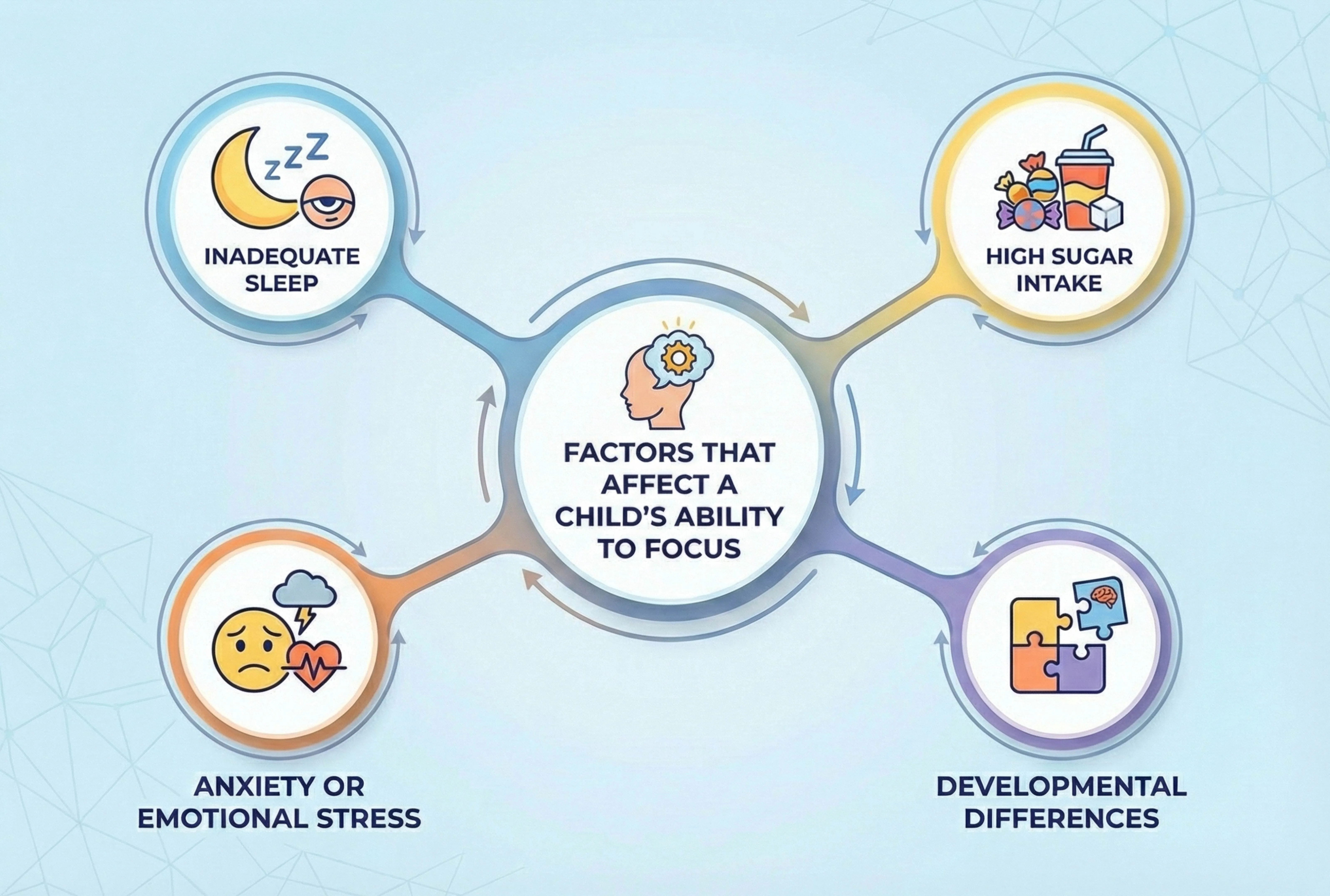
- Inadequate sleep: Overtired kids often look hyperactive, not sleepy. They're wired, distracted, and unable to settle. If your child isn't getting enough rest, their focus will suffer no matter how many strategies you try.
- High sugar intake: A breakfast full of sugary cereal can lead to an energy spike, followed by a crash an hour later. That crash makes it nearly impossible to concentrate.
- Anxiety or emotional stress: A child worried about school, friendships, or changes at home has less mental bandwidth for focusing on tasks. Their brain is busy processing big feelings.
- Developmental differences: Some kids have ADHD or other attention-related challenges. If you've tried everything and your child still struggles significantly, it may be worth talking to a pediatrician or child psychologist.
Understanding the root cause helps you respond with the right support, not just more rules.
Fun Activities to Boost Focus
Building attention doesn't have to feel like work. In fact, the best way to strengthen focus is through activities your child actually enjoys.
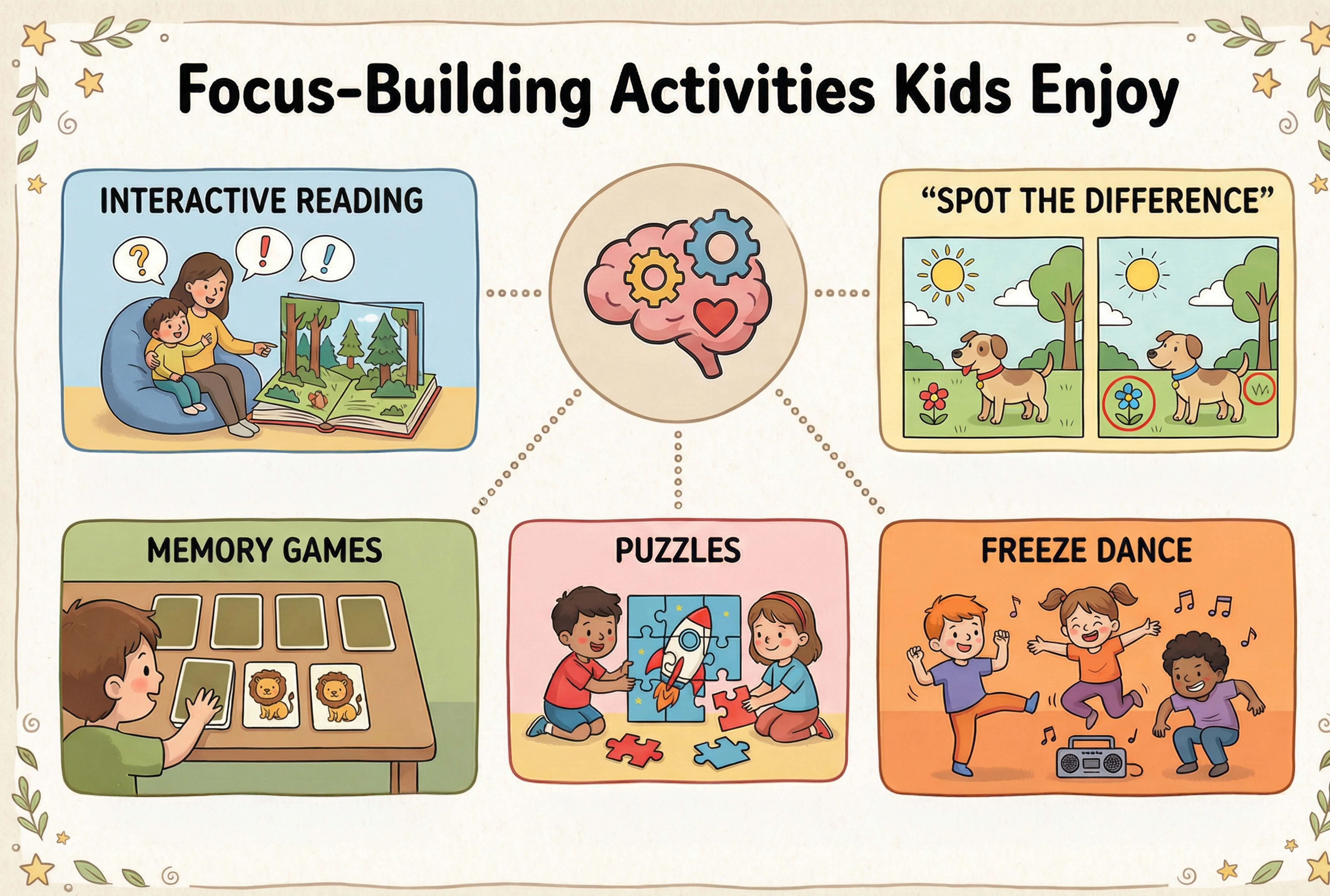 Interactive reading (top priority)
Reading together is one of the most effective ways to build attention. But not all reading is equal. When you read a story where your child is just a listener, their mind can wander. When they're actively involved, through answering questions, predicting what happens next, and talking about the pictures, they stay engaged.
Here's where personalized books make a real difference. When your child sees their own name and photo in the story, they're not just hearing about a character; they are the character. This emotional connection keeps them focused longer. Instead of checking out after two pages, they want to know what happens to them in the story. They ask questions. They point at their picture. They stay present.
If you're looking for stories that hold your child's attention while also building confidence and imagination, explore Wonderwraps books that put your child at the center of the adventure.
Memory games
Card matching activities or verbal challenges like "I went to the market and bought…," ask children to hold information in their minds while paying close attention. These games can start very simply and become more challenging over time as skills improve. Along the way, they build working memory, which supports classroom abilities such as following multi-step instructions, remembering sequences, and maintaining focus during learning tasks.
Puzzles
Puzzles demand visual focus and patience. Your child has to scan for the right piece, test different options, and stick with it until it fits. Even 10 minutes of puzzle time a few times a week builds sustained attention.
Freeze dance
This classic game teaches impulse control. When the music stops, your child has to freeze their body completely. It's fun, active, and trains their brain to stop on command, which is an essential skill for focus.
"Spot the difference"
These picture games invite children to compare two nearly identical images and notice small details that might be easy to miss. This type of activity encourages them to slow down, look more carefully, and pay sustained attention instead of rushing. Over time, that careful scanning strengthens visual focus and supports skills used in reading, writing, and classroom learning.
Build Focus One Day at a Time
There's no quick fix for attention span, but small, consistent efforts do add up over time.
Here's the truth most parents eventually bump into: kids focus better when the task matters to them. A worksheet about someone else's adventure? Boring. A book where they're the hero, solving problems and making choices? Suddenly, they're glued to every page.
 Tonight, try this: Pick one strategy from this list. Maybe it's a visual timer for homework, or maybe it's 10 minutes of reading a story that stars your child. See what happens. Then tomorrow, try it again.
If you're looking for an easy place to start, personalized stories like Wonderwraps books can turn reading time into a focus-building activity kids actually want to stick with.
Frequently Asked Questions (FAQs)
How long does it take to restore attention span?
It varies by child, but most kids show noticeable improvement within 2–4 weeks of consistent practice and environmental changes.
Is it possible to increase a kid's attention span by reducing screen time?
Yes, especially when you reduce fast-paced, high-stimulation content and replace it with slower, interactive activities like reading or hands-on play.
Does reading really help improve focus?
Absolutely. Interactive reading, particularly with personalized stories, helps children practice sustained attention while staying emotionally engaged with the content.